
Key Takeaways
- Feeling tired, stressed, or stretched too thin can make patient parenting harder.
- The Parent Reset offers six steps to practice: Notice, Pause, Regulate, Connect, Respond, and Repair.
- Helping children through big feelings can go hand in hand with holding clear limits.
- Understanding personality differences can make everyday family communication easier.
- Small changes add up. Taking responsibility, reconnecting, and trying again matter more than getting every moment right.
Power struggles rarely start with the big stuff. What turns that small friction into a daily battle usually has less to do with the child and more to do with what happens inside the parent’s brain in that exact moment.
Why Your Buttons Get Pushed Daily
Every parent has a list of moments that flip a switch. You told yourself you would handle it differently this time.
Then your child ignored the third reminder. Your teenager answered with an eye roll. Someone needed something just as you finally sat down.
Before you could think through your response, your voice got louder.
Later, you wondered, “Why did I react like that? I know better.”
Knowing what you want to do and being able to do it in an overwhelmed moment are two different things.
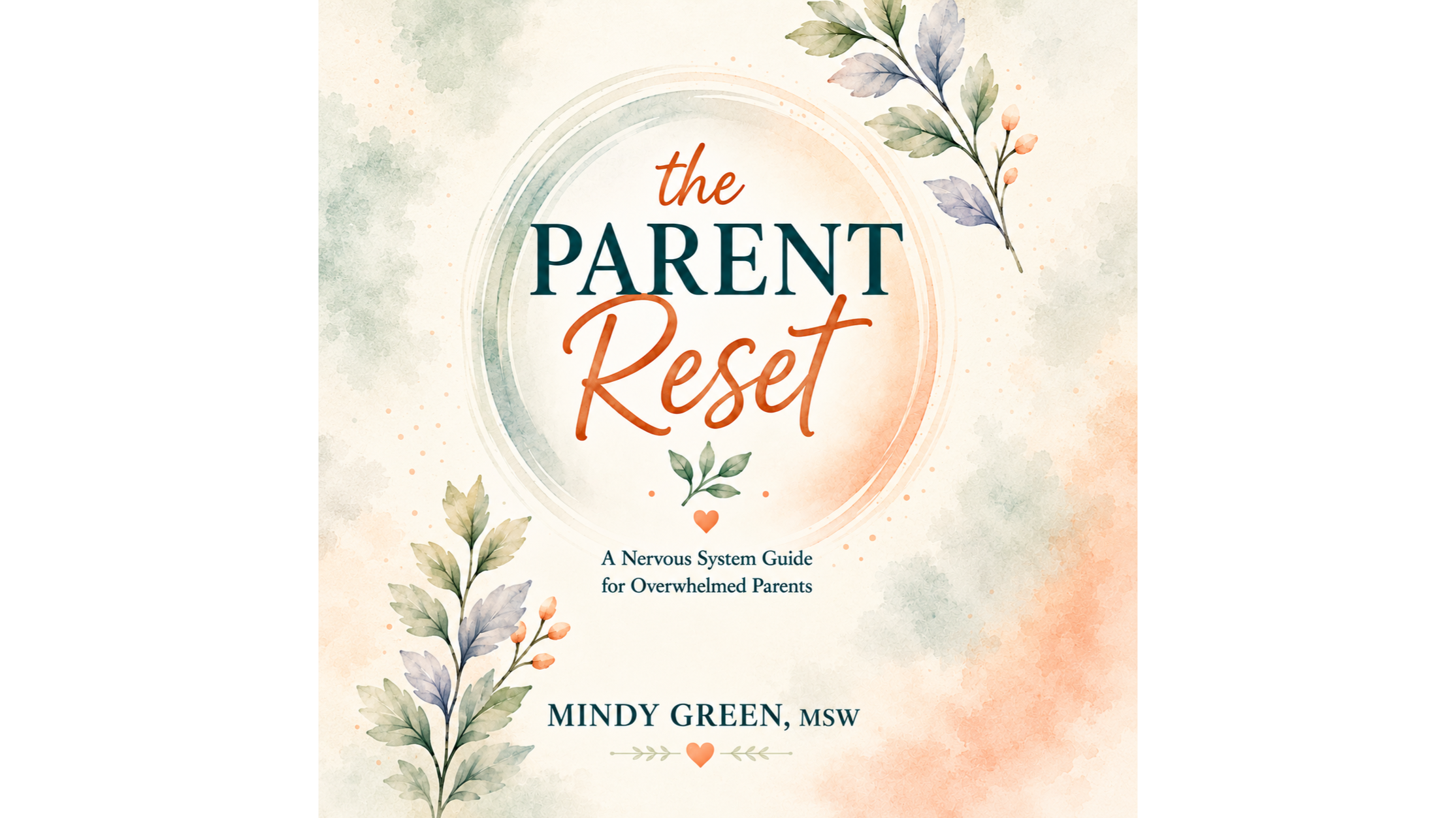
That gap is where The Parent Reset: A Nervous System Guide for Overwhelmed Parents, by Mindy Green, MSW, begins.
What Happens Beneath the Reaction?
Parenting reactions rarely happen in isolation.
You may be tired, hungry, worried about work, or carrying the mental load of keeping everyone’s day on track. A child’s behavior may also stir up familiar feelings, such as being ignored, judged, or powerless.
Past experiences can play a part. So can the demands of the day you are living right now.
Under high stress, flexible thinking and self-control can become harder. The thoughtful response you intended to give may feel much less available.
Understanding that can help you move from “What’s wrong with me?” toward a more useful question:
“What was happening inside me before I reacted?”
That question creates room for both compassion and responsibility.
Start With Your Own Early Clues
Stress often gives us clues before it becomes an outburst.
Your jaw tightens. Your shoulders rise. Your thoughts speed up. You start repeating yourself more loudly, or you feel an urge to withdraw and stop talking altogether.
Noticing these signals does not mean you will always catch them in time. It gives you something to practice.
You might ask:
- What am I noticing in my body?
- What was already demanding my energy today?
- What am I telling myself about my child’s behavior?
- What would help me respond more thoughtfully right now?
Sometimes the most useful discovery is simple: you have been trying to handle a difficult moment with very little energy left.
Six Steps to Return To
The Parent Reset Field Guide section offers six steps parents can return to when family life feels hard.
1. Notice
Recognize what is happening inside you. Are you tense, exhausted, rushed, or overwhelmed?
You do not have to explain your whole reaction immediately. Begin by noticing it.
2. Pause
Slow the moment enough to create a little space.
Relax your shoulders. Lower your voice. Remind yourself that you may not need to solve the entire problem right now.
If everyone is physically safe, you might think, “This is difficult, and I can take a moment before I respond.”
3. Regulate
Choose something that helps you feel steadier.
That might be a comfortable, slower breath, gentle movement, pressing your feet into the floor, or stepping away briefly when your child can safely be left.
Different people need different kinds of support. A useful reset is one that helps you become more able to choose your next action.
4. Connect
Get curious about your child’s experience before deciding what the behavior means.
A seven-year-old avoiding homework may be confused about the instructions. A tween arguing about a change in plans may need time to adjust. A teenager who responds sharply may be overwhelmed and struggling to explain it.
These are possibilities to explore, rather than conclusions to assume.
5. Respond
Choose the next helpful step, including a clear boundary when needed.
“I can see you’re frustrated. I won’t let you hit.”
“You want more time on your phone. It still needs to be put away.”
Connection and limits can exist in the same sentence.
6. Repair
When your response hurts the relationship, take responsibility and reconnect.
“I raised my voice. That wasn’t okay, and I’m sorry. Next time, I’m going to pause before we keep talking.”
Repair also includes practising the change you have named. Your child does not have to feel better immediately or reassure you that everything is fine.
Your Steadiness Offers Support
Children develop emotional regulation through experience, practice, and support from caring adults.
Co-regulation is part of that process. It includes warmth, predictable routines and expectations, and help learning what to do with big feelings.
A child may still cry, argue, or need space while you offer that support. Your steadier response gives you a better opportunity to listen, guide, and keep the boundary clear.
Personality Adds Another Helpful Lens
One child may appreciate a short explanation and a choice. Another may need reassurance, time to process, or more specific instructions.
The Parent Reset explores personality patterns through D.I.S.C. as one way to notice these differences.
The goal is to stay curious and adjust your approach. Personality insights do not explain every behavior or determine a child’s stress response. Age, skills, sensory needs, circumstances, and relationships matter too.
Small Resets Can Become New Patterns
A difficult afternoon does not erase your progress.
You may notice your stress sooner next time. You may lower your voice halfway through a sentence. You may return to a conversation and take responsibility more clearly.
Those moments count.
The Parent Reset offers parents practical ways to understand themselves, support their children, and build healthier family patterns with room for setbacks and beginning again.
Learn more about The Parent Reset: A Nervous System Guide for Overwhelmed Parents at https://mindygreencoaching.com/.
Mindy Green Coaching
mindy@mindygreencoaching.com
13008 Aderman Ct, Woodbridge, VA 22192
Woodbridge
Virginia
22192
United States


